Greek Quinoa Bowl with Hummus
15m easy
gluten-free vegetarian
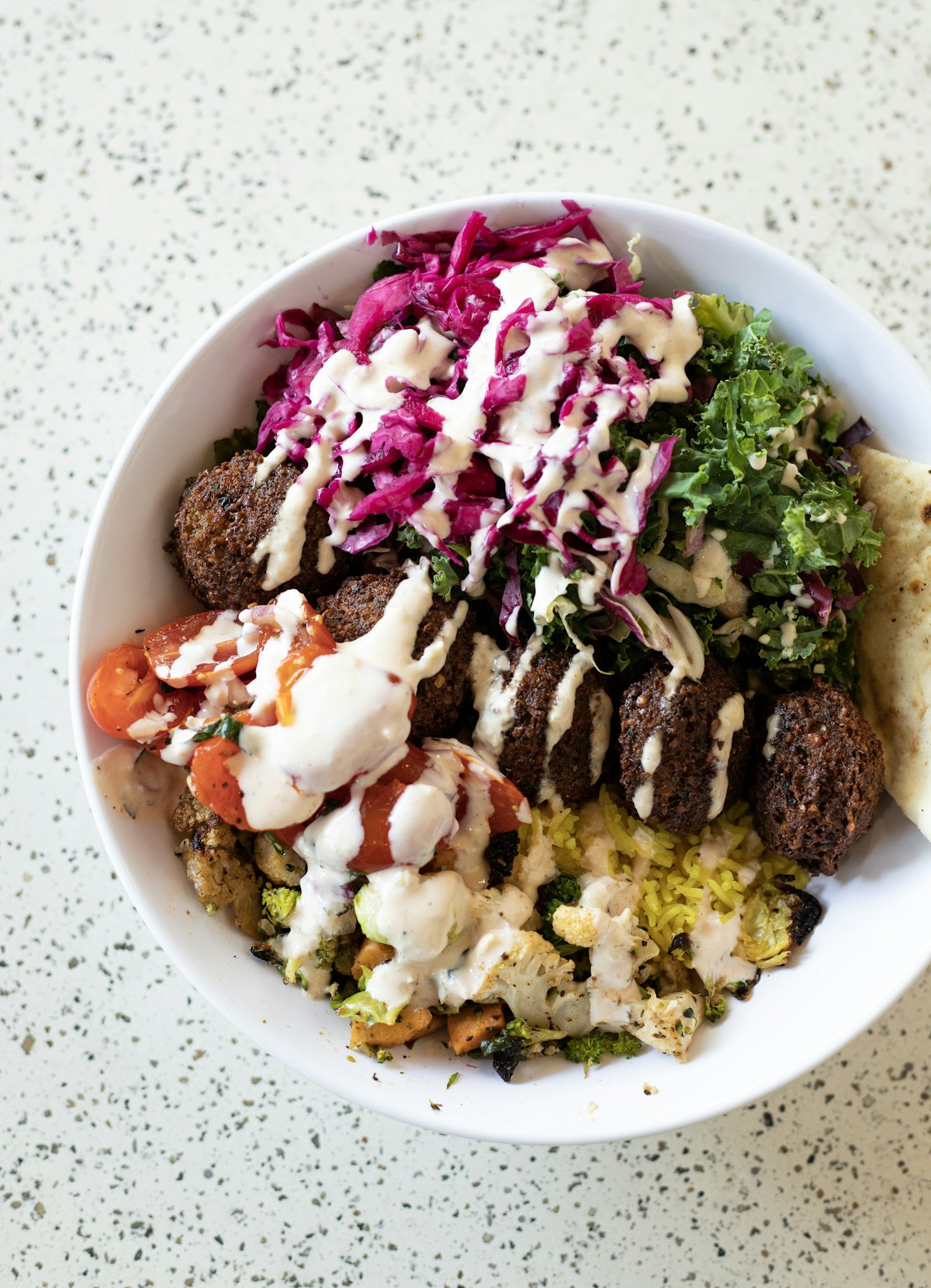
Baked quinoa-chickpea falafel served over fluffy quinoa with hummus, fresh cucumber, tomatoes, and a creamy tahini sauce. A protein-packed vegan bowl with bold Middle Eastern flavors.
Traditional falafel is deep-fried, and there is no pretending that baked falafel replicates that exact texture. It does not. What baked falafel does offer is a version that is genuinely good on its own terms — crispy on the outside, tender and herb-flecked on the inside, and far less messy to make at home. Adding cooked quinoa to the chickpea mixture changes the texture in a way that actually improves the baked version. The quinoa creates tiny pockets of softness throughout the falafel that keep the interior moist, solving the biggest problem with oven-baked falafel: dryness.
This bowl layers those quinoa-studded falafel over a bed of more quinoa, then adds all the accompaniments that make a falafel plate worth eating — cool hummus, crunchy cucumber, ripe tomatoes, sharp red onion, and a tahini sauce that ties everything together. It is a complete meal with 18 grams of protein per serving, all from plants.
Fifty minutes from start to finish, and the actual hands-on work is closer to twenty-five. Most of the time is the oven doing its job.
The food processor is essential here, and how you use it determines whether you get falafel or hummus. The mistake most people make is over-processing. You want to pulse — short, sharp bursts — until the chickpeas are broken down into coarse pieces about the size of couscous. Some larger chunks are fine. No smooth paste anywhere.
The herbs go in first with the chickpeas and spices. Parsley is the primary herb, with cilantro in a supporting role. This is the traditional ratio in most falafel recipes across the Middle East. If you dislike cilantro, increase the parsley to a full half cup and the falafel will still taste authentic.
Cumin and coriander are the essential spices. They provide the warm, earthy flavor that makes falafel taste like falafel. The cayenne adds a subtle background heat that you feel in your throat after a few bites but never on your tongue. A quarter teaspoon is gentle — increase to a half teaspoon if you want noticeable warmth.
The cooked quinoa goes in during the second round of pulsing, after the base is already chopped. Only 3 to 4 pulses — you want the quinoa distributed, not obliterated. Each little grain stays mostly intact and creates those pockets of tender texture in the finished falafel.
Two tablespoons of flour binds the mixture. All-purpose works. Chickpea flour works if you need the bowl to be fully gluten-free and adds a slightly nuttier flavor. Either way, the flour absorbs excess moisture and helps the falafel hold their shape.
Oil on the baking sheet and oil on top of the falafel — this is what creates the golden crust. Parchment paper prevents sticking and makes cleanup easier. If you skip the oil, the falafel will bake through but they will look pale and taste flat.
The flip at the halfway mark is important. It ensures both sides develop color and crispness. Use a thin spatula and flip gently — the falafel are delicate at this stage and firm up as they finish cooking.
At 375 degrees for 22 to 25 minutes, the falafel should be deep golden brown on both flat sides and firm to the touch. They will still feel slightly soft in the very center when hot, but they set up as they cool. If you want to check more thoroughly, our guide to quinoa cooking methods covers internal texture expectations for quinoa-based mixtures.
Tahini sauce is just tahini thinned with lemon juice and water. The trick is the ratio. Pure tahini is thick and sticky — it needs enough liquid to become pourable but not so much that it becomes watery. Start with equal parts lemon juice and water, whisk vigorously, and add water a teaspoon at a time until the sauce flows off a spoon in a steady stream.
The sauce will thicken as it sits. If you make it ahead, you will likely need to whisk in another tablespoon of water before serving. This is normal — tahini absorbs liquid over time.
Good tahini matters here more than in almost any other application because the sauce is uncooked and the flavor is exposed. Look for tahini made from hulled sesame seeds that is smooth and pourable from the jar, not stiff and gritty.
Start with quinoa on the bottom, slightly off-center to leave room for the hummus. Place three falafel on the quinoa. Arrange the cucumber, tomatoes, and red onion in their own sections — keeping toppings separate makes the bowl more visually appealing and lets you control the ratio in each bite.
The hummus goes on the side, not underneath or spread across the bottom. This way it stays thick and scoopable rather than melting into the warm quinoa. A generous two-tablespoon scoop per bowl is the right amount.
Drizzle the tahini sauce over the entire bowl just before eating. It should hit the falafel, the quinoa, and the vegetables.
The falafel freeze beautifully. Bake a double batch, cool completely, and freeze on a sheet pan before transferring to a freezer bag. Reheat from frozen in a 375-degree oven for 12 to 15 minutes. This makes assembling bowls on busy nights a matter of reheating and chopping.
For a different Mediterranean bowl approach, our Greek quinoa bowl uses a similar assembly concept with feta and red wine vinaigrette. And for a lighter salad that shares many of the same flavors, quinoa tabbouleh is built on the same herb-forward foundation.
Variations to try:
Add pickled turnips. The tangy, vibrant pink pickled turnips found at Middle Eastern markets add acidity and color that elevate the bowl.
Swap in baba ganoush. Replace the hummus with smoky baba ganoush for a different flavor profile that pairs especially well with the cumin in the falafel.
Add harissa. Stir a teaspoon of harissa paste into the tahini sauce for a spicy, smoky drizzle that transforms the entire bowl.
Make it a wrap. Warm a large pita or flatbread, spread hummus across the surface, add three falafel, pile on the vegetables, drizzle with tahini, and roll. Lunch on the go.
Preheat the oven to 375 degrees Fahrenheit and line a baking sheet with parchment paper. Brush lightly with olive oil or spray with cooking spray.
Cook the quinoa by combining the rinsed quinoa, 1 3/4 cups water, and a pinch of salt in a medium saucepan. Bring to a boil, reduce heat to low, cover, and simmer for 15 minutes. Remove from heat, keep covered for 5 minutes, then fluff with a fork. Measure out 1/2 cup of cooked quinoa for the falafel and set the rest aside for the bowls.
Make the falafel mixture by adding the chickpeas, parsley, cilantro, garlic, cumin, coriander, salt, and cayenne to a food processor. Pulse 8 to 10 times until the mixture is coarsely chopped but not pureed — you want texture, not hummus. Add the 1/2 cup of cooked quinoa, the flour, and 1 tablespoon of olive oil. Pulse 3 to 4 more times until just combined. The mixture should hold together when squeezed in your hand.
Scoop the falafel mixture into roughly 12 balls, about 2 tablespoons each. Flatten them slightly into thick discs and place on the prepared baking sheet. Brush the tops with the remaining tablespoon of olive oil.
Bake for 22 to 25 minutes, flipping once at the halfway mark, until the falafel are golden brown and firm on the outside. They will crisp further as they cool.
While the falafel bake, make the tahini sauce by whisking together the tahini, lemon juice, 2 tablespoons water, and a pinch of salt. The sauce should be pourable — add another tablespoon of water if it is too thick. It should drizzle easily from a spoon.
Assemble the bowls by dividing the remaining quinoa among 4 bowls. Arrange 3 falafel on each portion of quinoa. Add diced cucumber, halved cherry tomatoes, and sliced red onion. Place a generous scoop of hummus on the side, drizzle tahini sauce over the entire bowl, and serve.
Join 1,000+ home cooks who get weekly quinoa recipes and tips.
No spam. Unsubscribe anytime.